
Running a successful business today takes more than hard work. As companies grow, so do their daily operations. Managing finance, sales, inventory, employees, and customers using separate spreadsheets and disconnected tools can quickly become overwhelming.
Many businesses don’t struggle because of a lack of effort—they struggle because too much time is spent on manual processes instead of focusing on growth.
This is where the right business software solutions make a significant difference.
Modern software helps businesses automate routine tasks, improve collaboration, reduce errors, and make better decisions using real-time data.
Let’s explore the most important software solutions every business should know.
Why Business Software Matters
Technology is no longer just a support function.
Today, software forms the foundation of how successful businesses operate.
The right software can help organizations:
- Improve productivity
- Reduce manual work.
- Eliminate duplicate data entry.
- Improve customer service.
- Increase operational efficiency.
- Make data-driven decisions
- Scale with confidence.
Instead of managing multiple disconnected systems, businesses can bring everything together into one connected digital ecosystem.
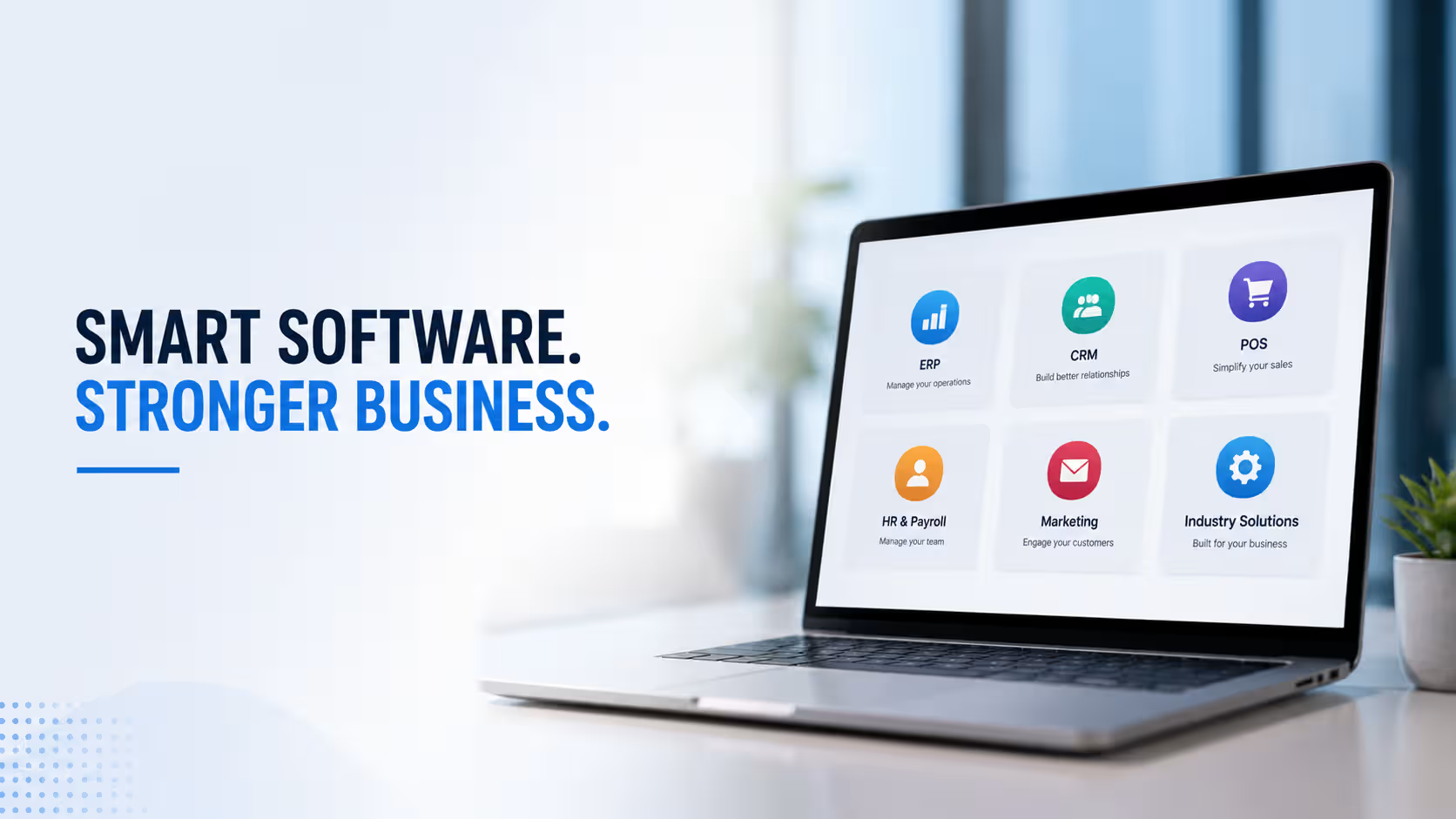
1. Enterprise Resource Planning (ERP)
An Enterprise Resource Planning (ERP) system connects the core functions of your business into one integrated platform.
Rather than using separate software for accounting, inventory, purchasing, and HR, ERP provides a single source of truth for the entire organization.
Typical ERP modules include:
- Finance & Accounting
- Sales Management
- Purchasing
- Inventory Management
- Human Resources
- Payroll
- Manufacturing
- Customer Management
- Reporting & Analytics
ERP systems help businesses improve visibility, reduce manual work, and support long-term growth.
2. Customer Relationship Management (CRM)
Your customers are one of your most valuable assets.
A Customer Relationship Management (CRM) system helps businesses organize customer information, manage leads, track sales opportunities, and strengthen customer relationships.
A CRM enables businesses to:
- Manage sales pipelines.
- Track customer interactions.
- Schedule follow-ups.
- Automate sales processes.
- Improve customer retention
- Increase sales performance.
Rather than storing customer information across emails and spreadsheets, everything is available in one centralized location.
3. POS & Billing Systems
For retailers, restaurants, cafés, supermarkets, salons, and service businesses, a modern POS (Point of Sale) system is essential.
Today’s POS systems do much more than process payments.
Modern POS solutions include:
- Fast billing
- Inventory tracking
- Product management
- Sales reporting
- Customer management
- Multiple payment methods
- Multi-branch management
- Real-time dashboards
A reliable POS system improves customer experience while giving business owners complete visibility into daily operations.
4. HR & Payroll Software
Managing employees manually becomes increasingly difficult as businesses grow.
An HR & payroll system helps automate routine HR processes while improving payroll accuracy.
Common features include:
- Employee records
- Attendance management
- Leave management
- Payroll processing
- Shift scheduling
- Performance tracking
- Expense management
- Employee self-service
Automation reduces administrative workload and helps HR teams focus on employee development rather than paperwork.
5. Marketing Automation Software
Marketing plays a vital role in business growth, but manually managing campaigns across multiple channels consumes valuable time.
Marketing Automation Software allows businesses to engage customers more effectively through automated communication.
Typical capabilities include:
- Email marketing
- WhatsApp marketing
- SMS campaigns
- Lead nurturing
- Customer segmentation
- Campaign scheduling
- Marketing analytics
- Customer journey automation
Automation ensures customers receive timely, personalized communication while reducing manual effort.
6. Industry-Specific Software
Every industry has unique operational requirements.
Industry-specific software is designed to solve challenges that general business software cannot.
Examples include:
Restaurant Management Software
Manage POS, kitchen operations, inventory, online ordering, customer loyalty, delivery platforms, and reporting from one system.
Retail Management Software
Handle billing, inventory, purchasing, promotions, barcode management, and customer loyalty programs.
Salon & Spa Software
Manage appointments, memberships, staff schedules, inventory, and customer records.
Healthcare Management Software
Support patient appointments, billing, medical records, pharmacy management, and reporting.
Diet & Nutrition Management Software
Track meal plans, nutrition programs, customer consultations, subscriptions, and progress reports.
Industry-focused software helps businesses improve efficiency by matching the way they actually work.
Choosing the Right Software for Your Business
Not every business needs every type of software.
The right solution depends on:
- Business size
- Industry
- Number of employees
- Number of branches
- Growth plans
- Existing processes
- Budget
- Operational challenges
The goal isn’t to install more software.
The goal is to implement software that solves real business problems.
Why Integration Matters
Many businesses already use software, but the systems don’t communicate with each other.
For example:
- Payroll is managed separately from attendance.
- Inventory doesn’t connect to sales.
- Customer information is stored in multiple places.
- Accounting requires manual data entry.
Integrated software eliminates these gaps by allowing information to flow automatically between departments.
This improves accuracy while reducing repetitive work.
Why Businesses Choose Merak Tech
At Merak Tech, we help businesses across Kuwait and the GCC identify, implement, and optimize the right software solutions for their unique requirements.
Our expertise includes:
- ERP Solutions
- Odoo ERP Implementation
- CRM Systems
- POS Solutions
- Restaurant Management Software
- HR & Payroll Systems
- Biometric Attendance
- AI Automation
- Custom Software Development
- Business Process Automation
Rather than recommending unnecessary software, we focus on building connected systems that support long-term business growth.
Final Thoughts
Technology alone doesn’t transform a business.
The right technology does.
Whether you’re looking to automate finance, improve customer relationships, simplify payroll, modernize retail operations, or manage multiple business locations, choosing the right Business Software Solutions can dramatically improve efficiency and support future growth.
Businesses that invest in connected systems today are better prepared for tomorrow’s opportunities.
If your team is still relying on spreadsheets, manual processes, and disconnected applications, now is the perfect time to rethink your technology stack.
The right software won’t just save time—it will help your business grow smarter.
Learn More
Discover how Merak Tech helps businesses across Kuwait and the GCC implement modern software solutions.
Frequently Asked Questions
What are Business Software Solutions?
Business Software Solutions are digital applications that help organizations manage operations such as finance, HR, sales, customer relationships, inventory, payroll, and reporting.
What is ERP software?
ERP (Enterprise Resource Planning) software integrates multiple business functions into one centralized platform, improving efficiency and decision-making.
Why is CRM important?
A CRM helps businesses manage customer relationships, track sales opportunities, improve customer service, and increase customer retention.
How do businesses choose the right software?
The right software depends on business size, industry, operational requirements, and growth objectives. Choosing integrated solutions that work together often delivers the best long-term results.