
Qayd compliance requirements apply more broadly than most business owners assume. This isn’t a rule aimed only at large listed companies—it covers nearly every registered legal entity in Kuwait, including many businesses that have never had to file a formal financial statement before.
Here’s exactly who’s covered, who’s exempt, and what changes for first-time filers.
In This Guide:

Who Must Comply With Qayd?
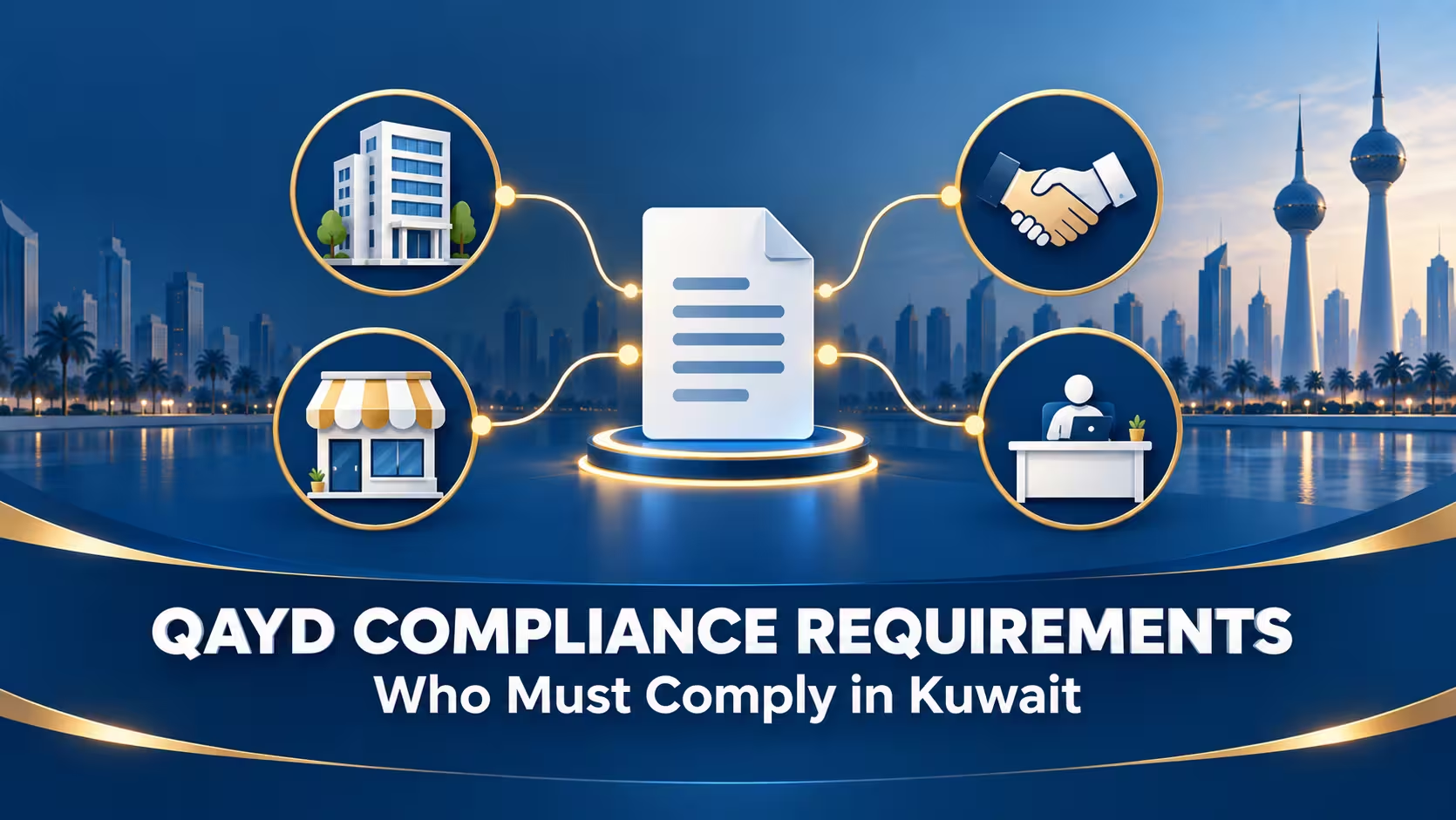
Qayd compliance requirements apply to essentially all legal entities registered in Kuwait, including:
- Limited liability companies (LLCs)
- Public and closed joint-stock companies
- General and limited partnerships
- Sole proprietorships
If your business has a commercial registration in Kuwait, the default assumption should be that Qayd applies to you starting 2027 — not that it doesn’t.
New to the topic? Start here: XBRL Qayd Kuwait: The Complete 2027 Compliance Guide
Entity-by-Entity Breakdown
| Entity Type | Qayd Compliance Status |
|---|---|
| LLC | Required to file starting 2027 |
| Joint-stock company (public or closed) | Required to file starting 2027; listed entities may also handle separate CMA reporting |
| Partnership (general or limited) | Required to file starting 2027 — new obligation for many |
| Sole proprietorship | Required to file starting 2027 — new obligation for most |
| Audit firms | Required to use XBRL when certifying client statements from 2027 |
Why This Is New for Sole Proprietorships and Partnerships
Historically, sole proprietorships and smaller partnerships in Kuwait were often exempt from the kind of formal financial disclosure larger companies had to handle. Qayd compliance requirements remove that exemption. These entities are now brought into the same reporting system as LLCs and joint-stock companies for the first time.
Practically, this means many small business owners who have never prepared an IFRS-structured financial statement, let alone an XBRL file, now need to build that capability from scratch — not just adjust an existing process.
What Changes for Audit Firms
Audit firms have their own piece of the Qayd compliance requirements: they’re required to use XBRL when preparing and certifying client statements from 2027 onward. This means audit firms need their own tooling and workflow changes independent of what their individual clients do — they can’t simply wait for clients to hand them XBRL-ready data.
Is Anyone Exempt?
Based on the Ministry’s current guidance, there’s no broad exemption carved out by company size or industry — the requirement is structured around legal entity type, not revenue or headcount. If your business holds a commercial registration in Kuwait, the safest assumption is that Qayd compliance requirements apply to you, and it’s worth confirming your specific status directly with the Ministry or a qualified advisor rather than assuming an exemption exists.
Frequently Asked Questions
Does company size affect Qayd compliance requirements?
No indication of a size-based exemption has been published — the requirement is based on legal entity type, not company size or revenue.
I run a very small sole proprietorship — does this really apply to me?
Yes. Sole proprietorships are explicitly included in the entities Qayd compliance requirements now cover, even if you’ve never filed a formal financial statement before.
Do foreign-owned companies registered in Kuwait need to comply?
If the entity holds a Kuwaiti commercial registration, it falls under the same Qayd compliance requirements as any other registered company — ownership structure doesn’t change that.
What if my company is dormant or not actively trading?
Reporting obligations are generally tied to registration status rather than trading activity, so it’s worth confirming directly with the Ministry whether a dormant registration still carries a filing requirement.
Not Sure If Qayd Applies to Your Business?
MerakTech helps Kuwait businesses confirm their compliance status and get their accounting system Qayd-ready before 2027.