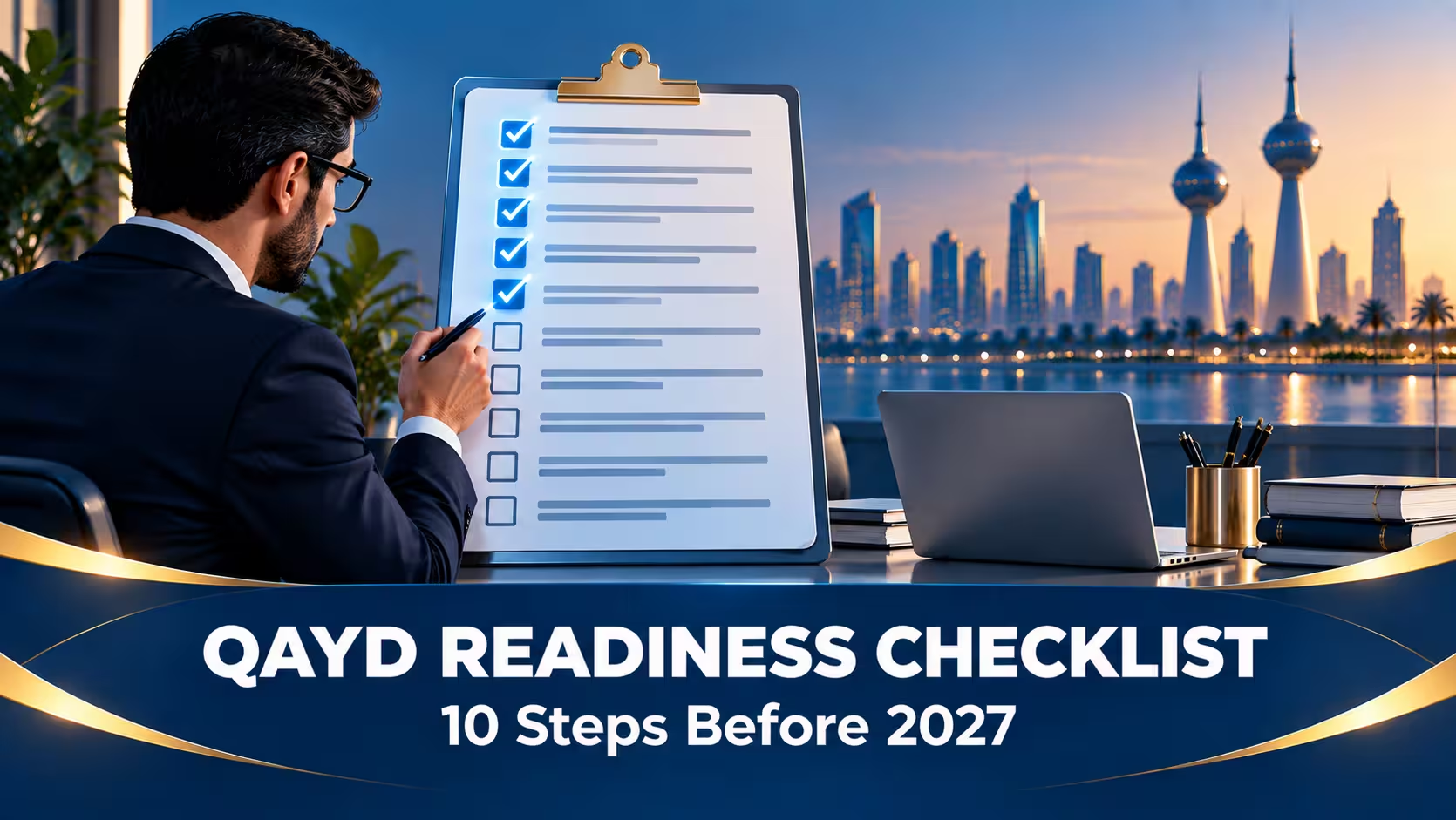

Qayd readiness checklist planning is the difference between a calm, orderly transition and a last-minute scramble. Everything that goes into getting Qayd-ready has been covered across this guide in detail—this post pulls it all together into one practical checklist you can actually work through, step by step, before the mandatory phase begins.
In This Guide:

The 10-Step Qayd Readiness Checklist
- Confirm whether Qayd applies to your entity.Almost every registered legal entity in Kuwait is covered — LLCs, joint-stock companies, partnerships, and sole proprietorships. If you’re unsure, don’t assume an exemption exists.Who Must Comply with Qayd XBRL in Kuwait
- Understand the actual deadline and what changes.Filing through Qayd is optional throughout 2026 and mandatory starting 2027, when paper and PDF submissions are discontinued entirely.XBRL Kuwait Deadline: What Happens After 2027
- Assess your current accounting system.Having accounting software isn’t the same as being Qayd-ready. Check whether your system can produce IFRS-structured statements and a validated XBRL export.Is Your Accounting System Qayd-Ready?
- Decide whether you need a migration first.Businesses on Tally, QuickBooks, or Excel generally need to move to an IFRS/XBRL-capable system before any XBRL-specific work can begin.Switching from Tally or QuickBooks to Odoo for Qayd Compliance
- Set up XBRL export capability.For Odoo users, this means installing or building a module that maps your financial reports to the Qayd taxonomy — Odoo doesn’t include this by default.Odoo XBRL Kuwait: Essential 5-Step Export Guide
- Understand the IFRS taxonomy your filing will be tagged against.Every figure in your statement needs to map to a specific taxonomy element — not just a similar-sounding label.IFRS Taxonomy Kuwait: Essential XBRL Tagging Guide
- Map your full chart of accounts.This is usually the slowest and most decisive step — every account needs to be reviewed and matched to the correct taxonomy element.Chart of Accounts Mapping for XBRL Kuwait: Step-by-Step
- Budget realistically for cost and time.Implementation cost and timeline vary heavily depending on your starting system — plan for 60 to 90 days as a general guide, longer if a migration is involved.XBRL Implementation Cost and Timeline in Kuwait
- Loop in your auditor early.Audit firms have their own XBRL obligations starting 2027 — coordinate with them well before filing season, not during it.XBRL for Audit and Accounting Firms in Kuwait
- Register and test on the Qayd portal during the voluntary window.Submit a real test filing and work through any validation errors while there’s no penalty for getting it wrong.Qayd Portal Kuwait: How to Register and File
How to Use This Checklist
These steps aren’t meant to be worked through in strict isolation — several run in parallel in practice. A migration (step 4) and chart of accounts mapping (step 7) often happen together, and auditor coordination (step 9) can start as early as step 1, the moment you’ve confirmed Qayd applies to you.
What matters more than sequence is starting before the pressure builds. Every step on this list is easier to do without a deadline sitting on top of it.
Where Businesses Usually Get Stuck
| Checklist Step | Common Sticking Point |
|---|---|
| System assessment | Assuming existing software is “good enough” without actually testing an export |
| Chart of accounts mapping | Underestimating how long this takes for a messy or inconsistent account structure |
| Portal testing | Waiting until close to the deadline, losing the “no penalty” advantage of the voluntary window |
| Auditor coordination | Only reaching out to the auditor once the filing itself is due |
Frequently Asked Questions
Do I need to complete this checklist in order?
Not strictly — several steps run in parallel in practice. What matters is starting steps 1–3 as soon as possible, since they determine the scope of everything after them.
How long does the full checklist typically take?
For a business already on a capable system, several weeks to a couple of months. For a business needing a full migration first, plan for several months overall.
Is this checklist different for a small sole proprietorship vs. a large company?
The steps themselves are the same, but the scale of work at each step differs—a smaller business typically has fewer accounts to map and a simpler system to assess.
What’s the single most important step to start with?
Confirming your accounting system’s actual XBRL readiness (step 3). It determines whether you’re looking at a module setup or a full migration, which shapes the entire timeline that follows.
Work Through This Checklist With Us
MerakTech runs a free assessment covering every step on this checklist—system readiness, migration needs, chart of accounts mapping, and portal testing — so nothing gets missed before 2027.