
AI can now write Odoo modules, draft automations, and build small applications in a fraction of the time it used to take. That is real progress, and it changes how fast a project can move. But it does not change the first rule of ERP: software cannot fix a business that is not managed well. This guide explains what a good Odoo AI implementation Kuwait project looks like in practice, where AI genuinely helps, where it cannot replace an experienced consultant, and how to avoid automating the wrong process faster.
In this guide
- Faster Is Not the Same as Smarter
- Where AI Helps in an Odoo Project
- Where Business Expertise Still Decides
- The Risk of Automating the Wrong Process
- Odoo, AI and Business Expertise Together
- What This Means for Kuwait Companies
- Questions to Ask Your Implementation Partner
- A Practical Way to Start
- Common Mistakes
- Frequently Asked Questions
- Final Thoughts
Faster Is Not the Same as Smarter
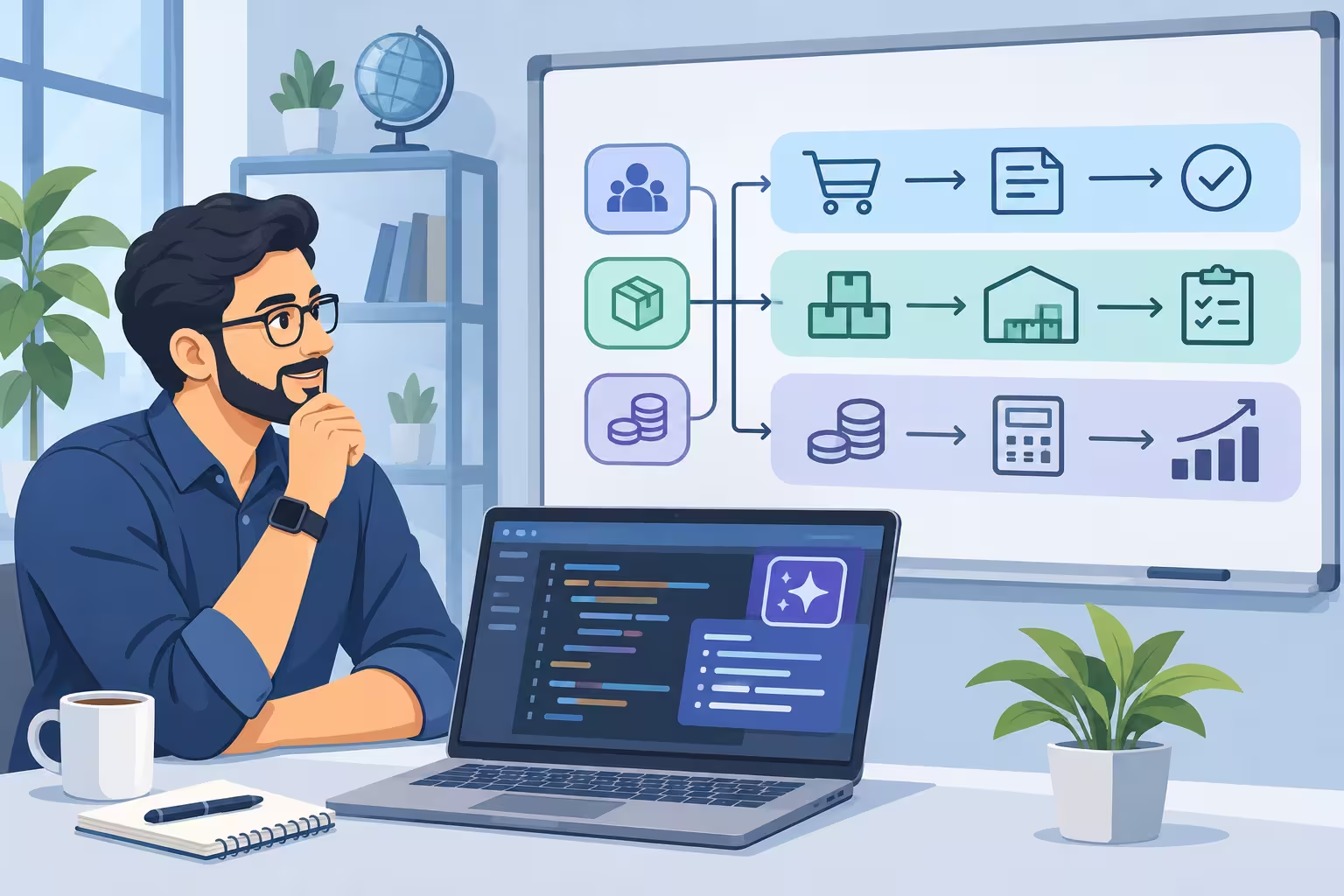
When code becomes cheap and quick, a new temptation appears: build more, build sooner. But an ERP is not a pile of features. It is the system that carries your sales, purchasing, stock, finance and operations. If those areas already run on unclear rules, informal approvals and duplicated data, faster software only lets the same problems spread faster.
The real question is no longer “can we build it?” It is “should we build it this way, and does it fit how the business really works?”
Where AI Helps in an Odoo Project
| Area | How AI Can Help | Still Needs |
|---|---|---|
| Custom modules | Drafts code and views faster. | Developer review, testing and upgrade planning. |
| Workflow automation | Builds approvals, reminders and rules quickly. | A correct process to automate. |
| Data migration | Helps clean, map and check records. | Business sign-off on what the data means. |
| Reports and dashboards | Speeds up report building. | Clear definitions of each number. |
| Documentation and training | Drafts guides and user manuals. | Checking against how staff actually work. |
| Testing | Helps generate test cases. | Real users testing real scenarios. |
Where Business Expertise Still Decides
Some parts of an ERP project cannot be generated, because they depend on judgement about your company:
- Sales: how quotes, discounts, approvals and credit terms really work.
- Inventory: how stock moves between warehouses, branches and suppliers, and who is responsible for counts.
- Finance: how invoicing, payments, taxes and reporting should follow your accounting practice.
- Operations: who does what, in what order, and what happens when something goes wrong.
- People: who will use the system daily, what they resist and what they need to be trained on.
An experienced ERP consultant asks the uncomfortable questions: why does this approval exist, who owns this number, and what happens if we simply stop doing this step? AI can speed up the answer once it is known, but it does not know your business until someone explains it.
The Risk of Automating the Wrong Process
Automating a broken process does not repair it. It makes the errors happen faster and in greater volume, and it makes them harder to notice.
| Situation | If You Automate It As-Is | Better First Step |
|---|---|---|
| Unclear approval rules | Orders get blocked or skipped unpredictably. | Agree on who approves what and up to which amount. |
| Messy product and customer data | Duplicates and wrong prices spread. | Clean and standardise before migration. |
| Stock counts nobody trusts | Automatic reordering uses wrong numbers. | Fix counting discipline and ownership. |
| Duplicate manual steps | The duplication is built into the system. | Remove the step before coding it. |
| Reports with unclear definitions | Teams argue about numbers on a faster dashboard. | Define each metric in writing. |
Odoo, AI and Business Expertise Together
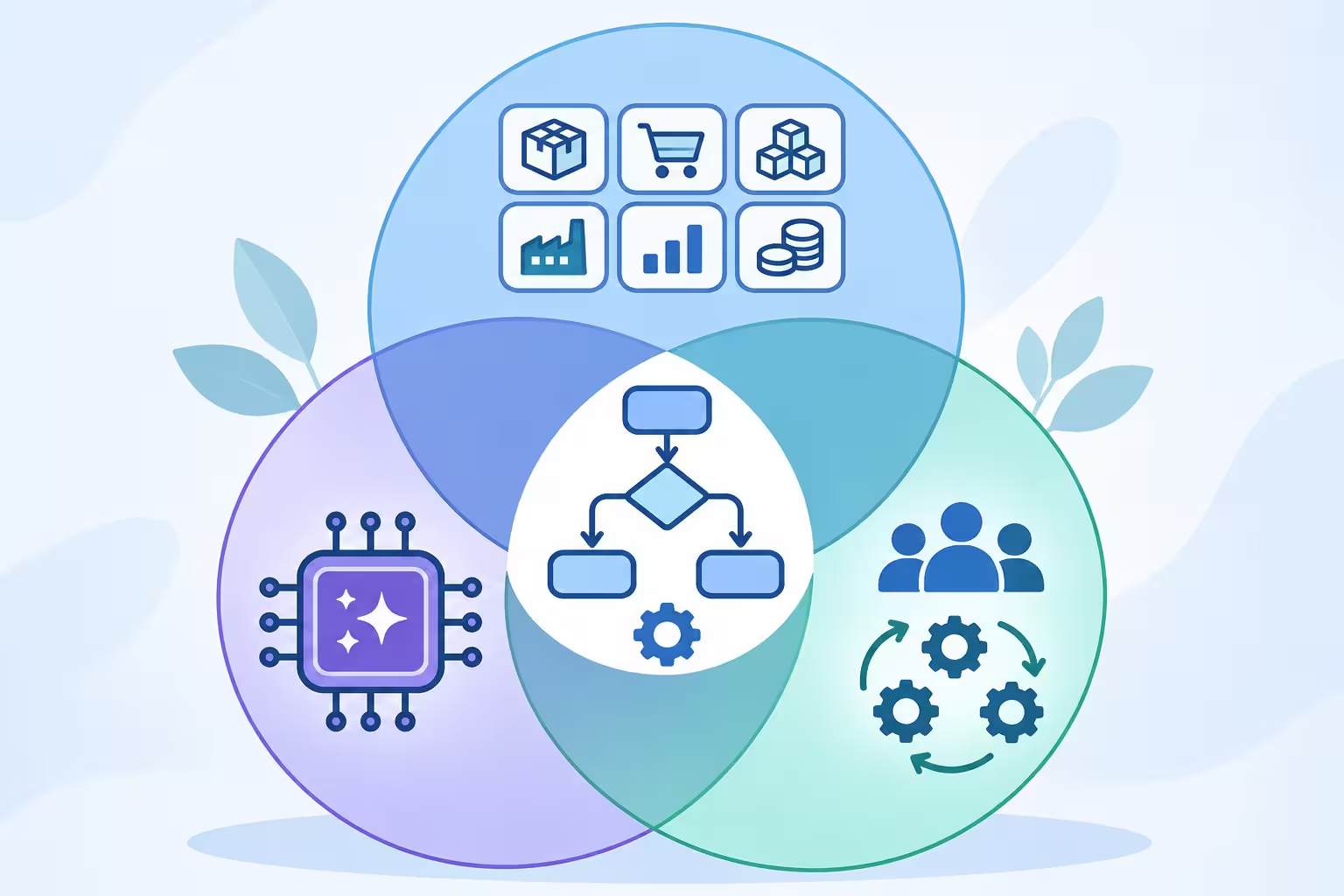
The strongest approach combines three things, and none of them works well alone:
- Odoo: a flexible, modular ERP platform that covers sales, inventory, accounting, manufacturing and more.
- AI: speed in building, testing, documenting and analysing.
- Business expertise: consultants who understand how companies actually run and can design the process before anyone writes code.
What This Means for Kuwait Companies
- Arabic and English. Documents, reports and screens often need both languages. Check this early, not after launch.
- Local payments and banking. KNET and local bank reconciliation should be confirmed with your partner, not assumed.
- KWD with three decimals. Test totals, tax lines and rounding across sales, purchasing and accounting.
- Multi-branch and mixed teams. Branch rules, approvals and reporting differ more than most owners expect.
- Family and owner-led decision making. Process changes need buy-in from the people who currently make the decisions.
- Local support. You want a partner who understands local business practice and can respond in your time zone.
For the full project path, read our guide to Odoo implementation in Kuwait. If you are still deciding between a platform and a bespoke build, see Odoo vs custom software.
Questions to Ask Your Odoo AI Implementation Kuwait Partner
- How do you study our processes before configuring or coding anything?
- Where do you use AI in the project, and who reviews what it produces?
- How do you decide what to automate and what to simplify or remove?
- Who is responsible for testing, and do real users take part?
- How is custom code documented and maintained through Odoo upgrades?
- How will you train our staff and measure adoption?
- What does support look like after go-live?
- Can you show a past project where you advised against building something?
A Practical Way to Start Odoo AI Implementation Kuwait
- Map the current process in plain language: who does what, in what order.
- Find the pain. Pick the two or three issues that cost the most time or money.
- Simplify before automating. Remove steps, clarify rules and assign owners.
- Configure standard Odoo first. Add custom work only where standard features genuinely fall short.
- Use AI to speed up the build, with human review and testing at every stage.
- Pilot with one team or branch and gather feedback.
- Train, launch and review the numbers after the first month.
Common Mistakes
- Treating ERP as a coding project instead of a business project.
- Letting speed replace analysis, because building feels cheap.
- Customising too much and making upgrades harder.
- Skipping data cleanup before migration.
- Trusting generated code without review and testing.
- Ignoring the people who will use the system every day.
- Measuring “go-live” instead of results such as time saved, fewer errors and clearer reports.
Frequently Asked Questions
Can AI handle Odoo AI implementation Kuwait projects alone?
AI can speed up parts of the work, such as modules, automations and documentation. A working ERP still needs correct processes, clean data, testing and an experienced team to design and review it.
Will AI replace ERP consultants?
It changes how they work, but it does not replace the need to understand a business. Consultants who combine process knowledge with AI tools can deliver faster and make better decisions.
Is faster implementation always better?
No. Speed helps only when the process being built is right. A fast implementation of a poor process creates problems sooner.
What should I fix before starting an Odoo project?
Clarify who owns each process and approval, clean your product, customer and supplier data, and agree on how key numbers are defined.
How do I know if a partner will do more than write code?
Ask how they analyse processes, how they test with real users and whether they have advised a client to simplify instead of customise.
Do I need custom development for Odoo?
Not always. Standard Odoo covers a lot. Custom work should be limited to gaps that genuinely affect your operation.
Final Thoughts
The future of ERP is not about who can build software fastest. It is about who can make a business run smarter. Odoo AI implementation Kuwait projects work best when the platform, the speed of AI and real business expertise are used together, with process design first and code second. Before you automate anything, ask whether the process deserves to be automated at all.
Want to run your business on Odoo?
Talk to Merak Tech about Odoo, AI and business expertise working together for your company. Contact us here.