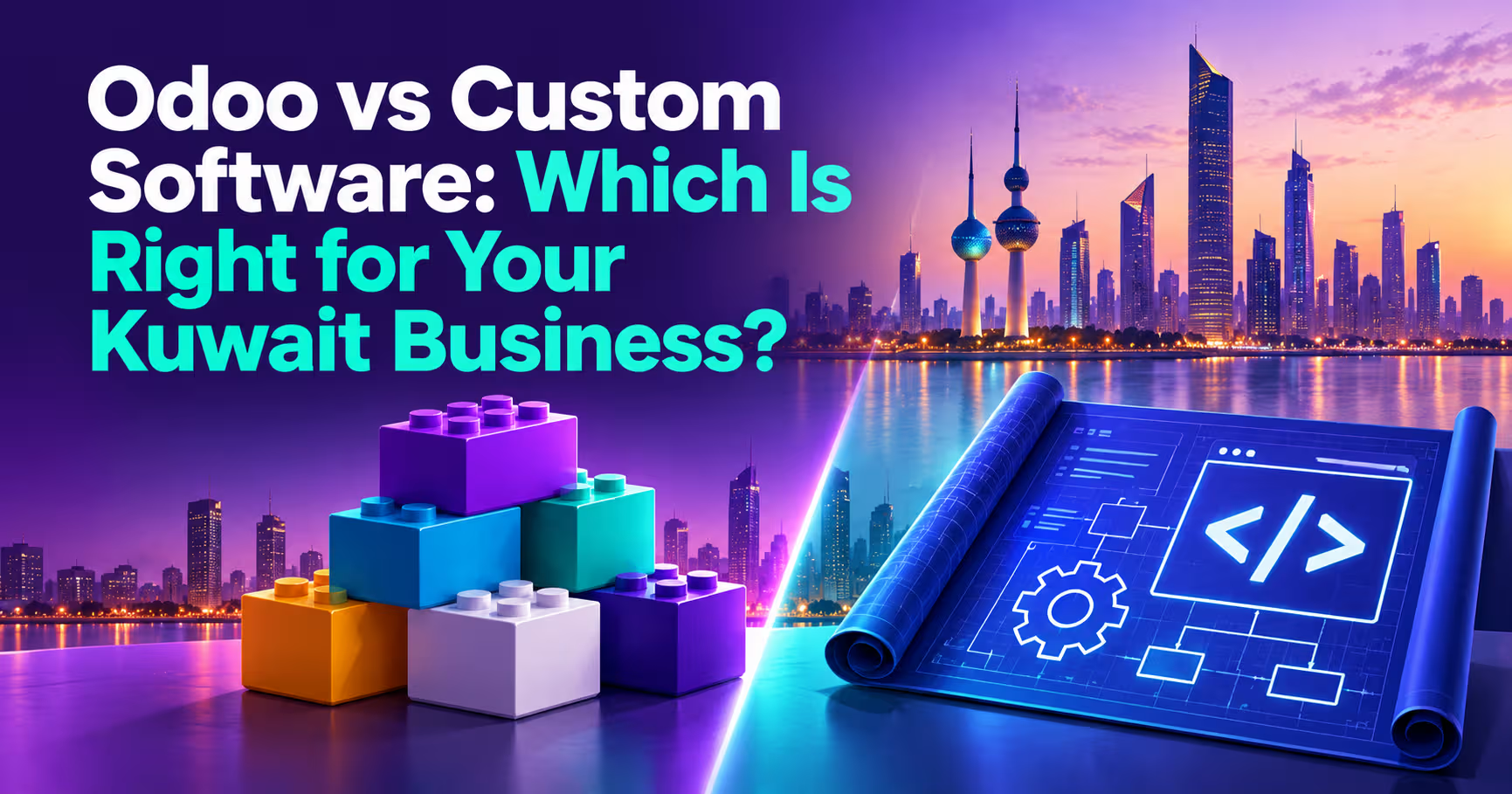

Choosing between Odoo vs custom software is one of the biggest decisions a growing Kuwait business makes. Odoo gets you running faster with proven modules and a lower starting cost. Custom software gives you a system built exactly around your process, but it takes longer and depends heavily on who builds it. This guide compares both honestly, so you can decide based on your business and not on a sales pitch.
In this guide
- Quick Answer
- What Is Odoo?
- What Is Custom Software?
- Odoo vs Custom Software: Side-by-Side Comparison
- When Odoo Is the Better Choice
- When Custom Software Is the Better Choice
- The Hybrid Option: Odoo Plus Custom Modules
- What Matters Specifically in Kuwait
- Decision Checklist
- Common Mistakes
- Frequently Asked Questions
- Final Thoughts
Quick Answer
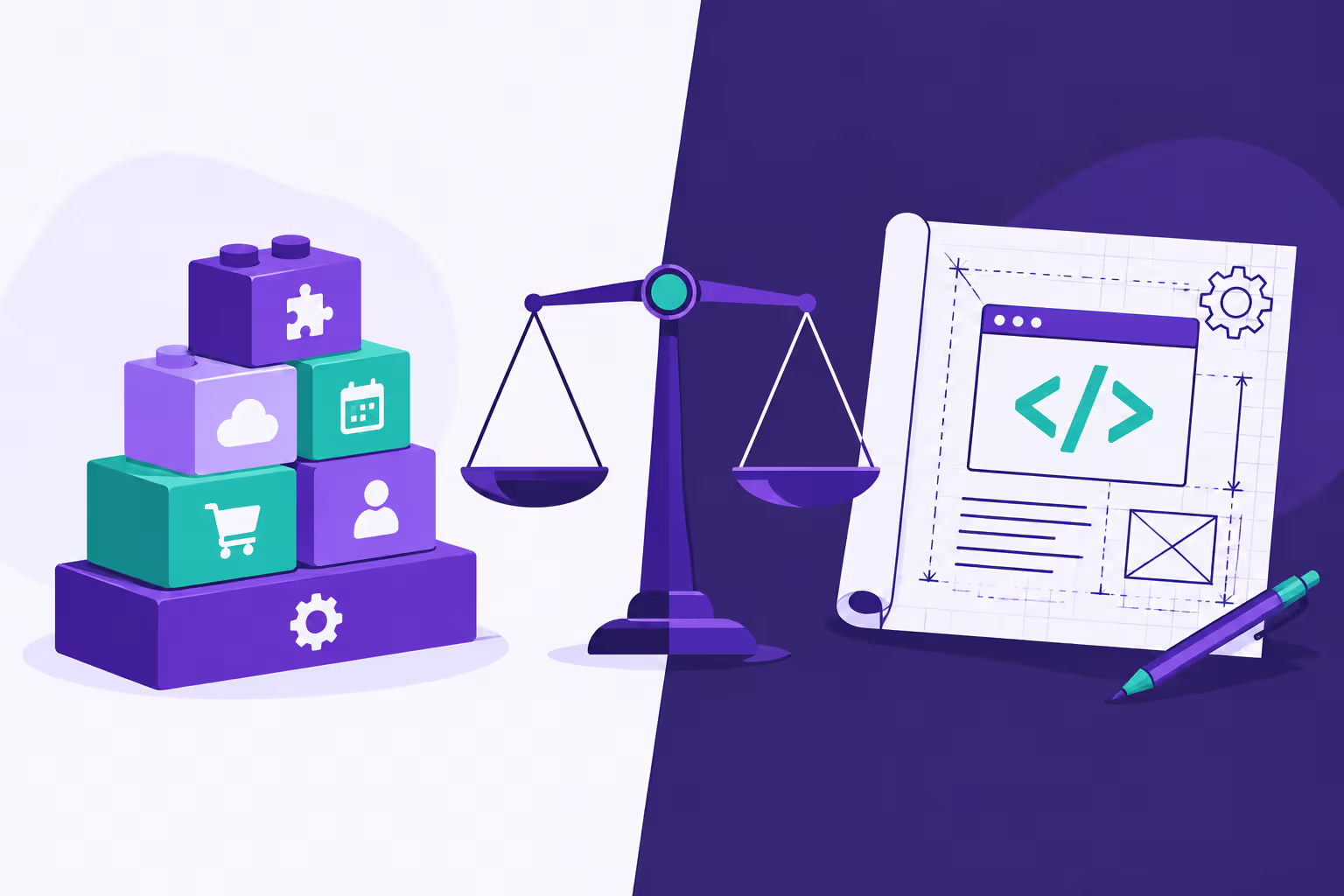
Choose Odoo if your processes are fairly standard (accounting, sales, inventory, purchasing, HR) and you want to go live quickly with a system that keeps improving. Choose custom software if your core process is unique and gives you a competitive edge, or if no existing product fits. Many Kuwait businesses end up in the middle: Odoo for the standard parts, plus custom modules for the few things that are truly different.
What Is Odoo?
Odoo is a modular business platform with apps for accounting, sales, CRM, inventory, purchasing, manufacturing, HR, point of sale, e-commerce and more. You start with the apps you need and add others later. Its open-source roots mean it can be customized, and a large community and partner network supports it. You can see the full app list on the official Odoo website.
What Is Custom Software?
Custom software is a system designed and built from scratch, or from a framework, for your specific business. You define the workflows, screens, rules and reports, and a development team builds them. You own the design, and the system can match your process exactly.
Odoo vs Custom Software: Side-by-Side Comparison
| Factor | Odoo | Custom Software |
|---|---|---|
| Time to launch | Usually faster, since core features already exist. | Longer, because everything is designed and built. |
| Starting cost | Lower upfront, with licensing and implementation costs. | Higher upfront, with no license fee. |
| Fit to your process | Strong for standard processes, with some adaptation needed. | Exact fit to your workflow. |
| Flexibility | Configurable and extendable, within the platform’s structure. | Highly flexible, with no platform limits. |
| Scalability | Add apps, users and companies as you grow. | Scales as far as the design and team allow. |
| Integrations | Many connectors and apps available. | Built to order, one by one. |
| Maintenance and updates | Regular releases. Heavy customization can make upgrades harder. | Your team or vendor maintains everything, always. |
| Vendor dependence | Many partners can support it, so switching is easier. | Depends on the developers who know your code. |
| Risk | Lower, since the product is proven. | Higher, since quality depends on the build and team. |
| Ownership | You license the platform and own your data. | You own the system and the data. |
| Long-term cost | Licenses, hosting, support and upgrades. | Hosting, maintenance, bug fixes and new features. |
When Odoo Is the Better Choice
- Your processes are mostly standard: invoicing, purchasing, stock, payroll, CRM and reporting.
- You are replacing spreadsheets or several disconnected tools and want everything in one place.
- You want speed: a working system in a shorter time frame.
- You expect to grow: new branches, companies and modules over time.
- Your budget favors a lower starting cost over a bespoke build.
- You want accounting and compliance you can trust on a mature platform, including structured reporting readiness such as XBRL planning.
When Custom Software Is the Better Choice
- Your core process is unique, and it is the reason customers choose you.
- No existing product fits, and heavy customization of a platform would cost more than building.
- You are building a product, such as a SaaS platform, customer portal or mobile app, not an internal system.
- You need very specific performance, integrations or user experience that a general platform can’t deliver.
- You have, or can hire, a reliable development team for the long term.
- You want complete control over the roadmap and data model.
The Hybrid Option: Odoo Plus Custom Modules
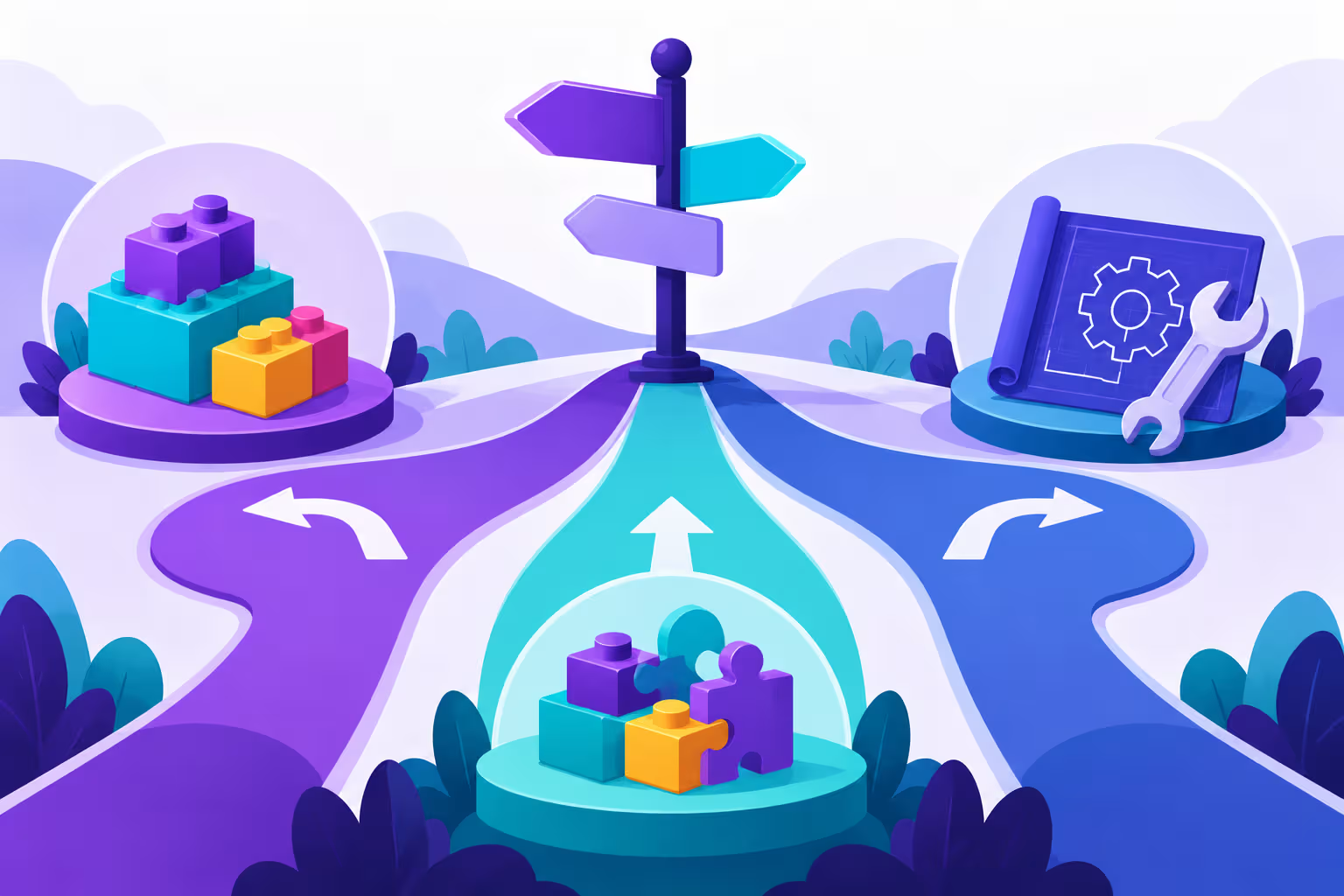
Odoo vs custom software is not always an either-or choice. A common approach is to run standard processes on Odoo and build custom modules, portals or integrations only where your business is truly different. For example, finance, inventory and HR run on Odoo, while a unique customer-facing app or workflow is custom-built and connected through integration.
This keeps the cost and risk of customization focused on the parts that matter. For the implementation side, see our step-by-step Odoo implementation guide for Kuwait.
What Matters Specifically in Kuwait
- Arabic and English: check right-to-left support, printed documents and reports in both languages.
- KWD with three decimals: confirm currency precision across invoices, prices and reports.
- Local compliance: if you will file structured financial statements, plan how your system will map and export that data.
- Payments: KNET and local gateway integration for online sales or POS.
- Multi-branch and multi-company: common in Kuwait groups, so test this in your demo or design.
- Local support: a team that can respond in your time zone and language, whichever route you choose.
Decision Checklist
| Question | If Yes, Lean Toward |
|---|---|
| Are 80% or more of your processes standard business functions? | Odoo |
| Do you need to go live within months, not a year? | Odoo |
| Is your main workflow unique and your competitive edge? | Custom |
| Are you building a customer-facing product or platform? | Custom |
| Do you lack an in-house technical team? | Odoo, or custom with a long-term support agreement |
| Is only a small part of your process unusual? | Hybrid |
| Do you need full control of the roadmap and code? | Custom |
Common Mistakes
- Building custom software for standard processes that a proven platform already handles.
- Over-customizing Odoo until it behaves like a custom build with extra upgrade pain.
- Choosing on starting price only and ignoring maintenance, hosting and upgrade costs.
- Skipping requirements work, which causes scope creep in either route.
- Relying on one freelancer for a custom build with no documentation or backup.
- Underestimating change management: staff training matters as much as the software.
Frequently Asked Questions
Is Odoo cheaper than custom software?
Usually at the start, yes, because the core features already exist. Over many years, the total cost depends on licensing, customization, hosting and support for Odoo, or maintenance and new features for custom software.
Can Odoo be customized?
Yes. You can configure it, add custom fields and reports, and build custom modules. Keep customization focused so upgrades stay manageable.
How long does custom software take to build?
It depends on scope. A detailed requirements phase gives a realistic estimate. In general, a custom system takes longer to launch than configuring a platform like Odoo.
Who owns custom software?
That depends on your contract. Make sure it states clearly that you own the source code, data and documentation.
Can I start with Odoo and add custom software later?
Yes. Odoo supports integrations and custom modules, so you can add custom parts where needed as your business grows.
Which is better for a small business?
Most small businesses with standard needs do well with a ready platform like Odoo. Choose custom only when your process is truly unique or you are building a product.
Final Thoughts
There is no universal winner in the Odoo vs custom software question. If your needs are standard, Odoo is usually the faster, lower-risk route. If your process is your edge, custom software gives you control. For many Kuwait businesses, a hybrid of Odoo for the core and custom modules for the differences is the most practical answer. Start by writing down what makes your business different, and let that decide.
Not sure whether Odoo or custom software fits your business?
Talk to [Your Company Name] about your processes and get an honest recommendation. Contact us here.